
By Siddhi Mehta
31 Aug 2026
If you've ever tried to take a machine learning prototype and turn it into a production system that insurers, farmers, and regulators can actually trust, you know the gap between "it works on my laptop" and "it works in the real world" is enormous. That gap is exactly where infrastructure choices start to matter — and it's where DeployByDesign made a real difference in building CattleSense.
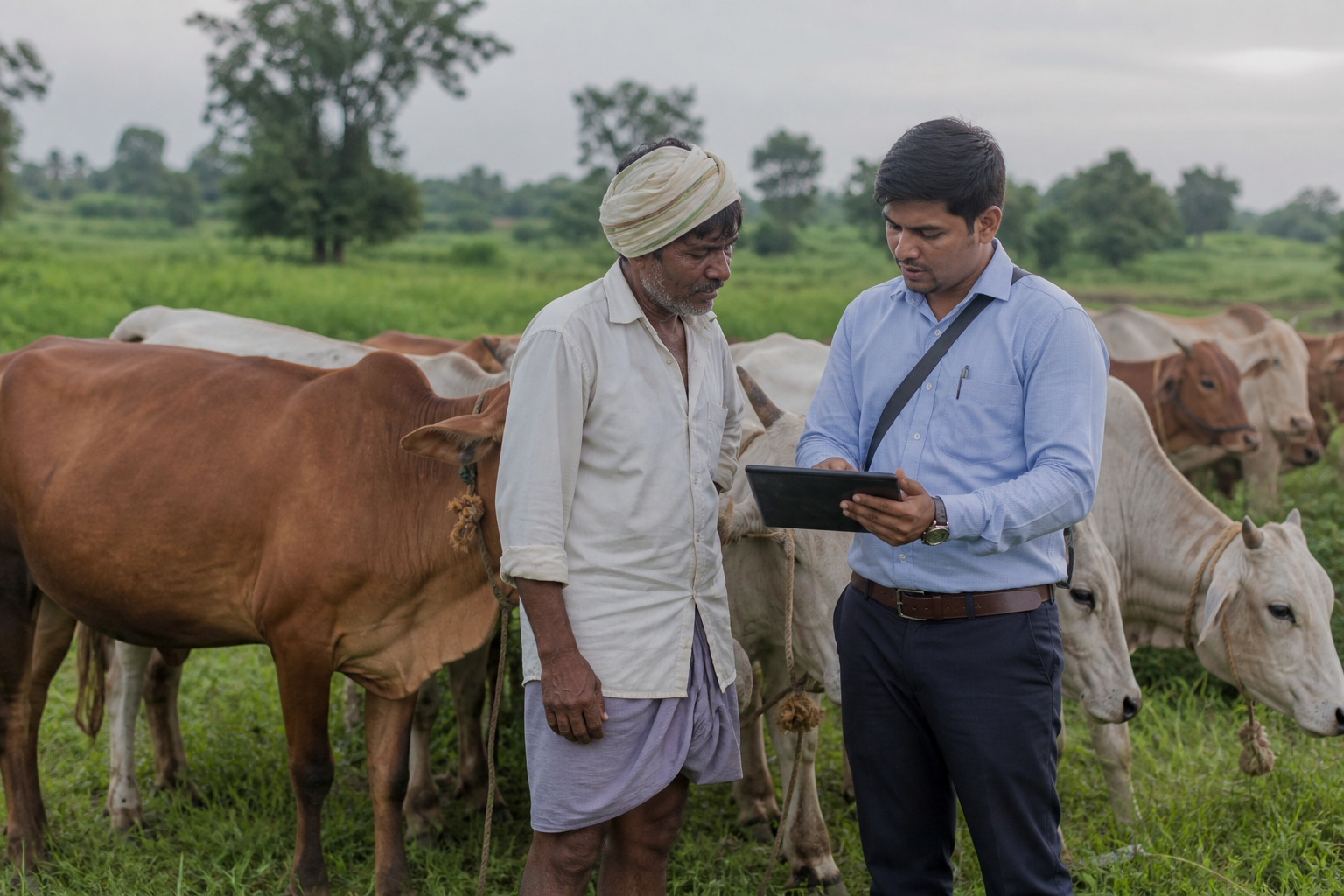
CattleSense set out to solve a challenge that has long plagued livestock insurance: unreliable animal identification. Rather than depending on RFID tags and manual inspections — methods that are both prone to manipulation and inherently inconsistent — the team built a platform that identifies individual cattle from muzzle images using computer vision, complemented by AI-driven health scoring and a domain-specific conversational assistant.
The stakes were considerable. This was not an early-stage experiment — it was a production system insurers would depend on for enrollment, underwriting, and claims validation. Delivering on that required infrastructure capable of supporting:
This is where DeployByDesign came in.
DeployByDesign's pitch is simple: research-grade GPU and CPU workspaces — JupyterLab, RStudio, VS Code, MLflow — provisioned in minutes, with no cluster to configure. For a project like CattleSense, that simplicity translated into concrete, day-to-day benefits.
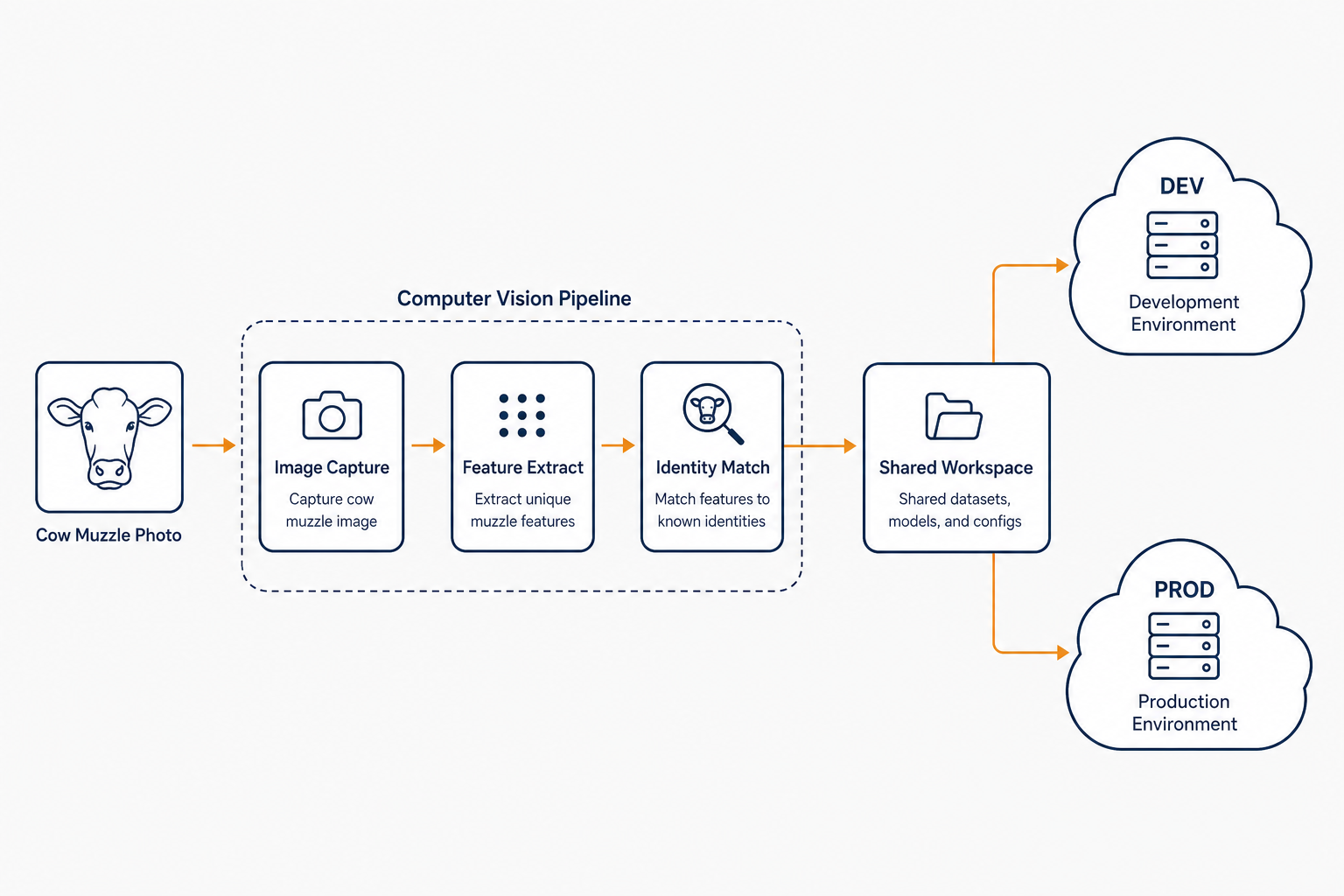
CattleSense ran its development environment on GCP and production on AWS — a setup that normally means maintaining two separate mental models, two sets of tooling, and two places where things can quietly diverge. DeployByDesign kept a consistent workspace experience across both, so the team could move between environments without relearning infrastructure quirks every time they switched context.
Splitting dev and prod across two different clouds usually comes with a quiet tax: duplicated credentials and permissions that have to be manually kept in sync on both sides. DeployByDesign's cross-account role support meant the CattleSense team could manage access across GCP and AWS without maintaining two separate, brittle sets of credentials — one less thing standing between a model that worked in development and one that was ready for production.
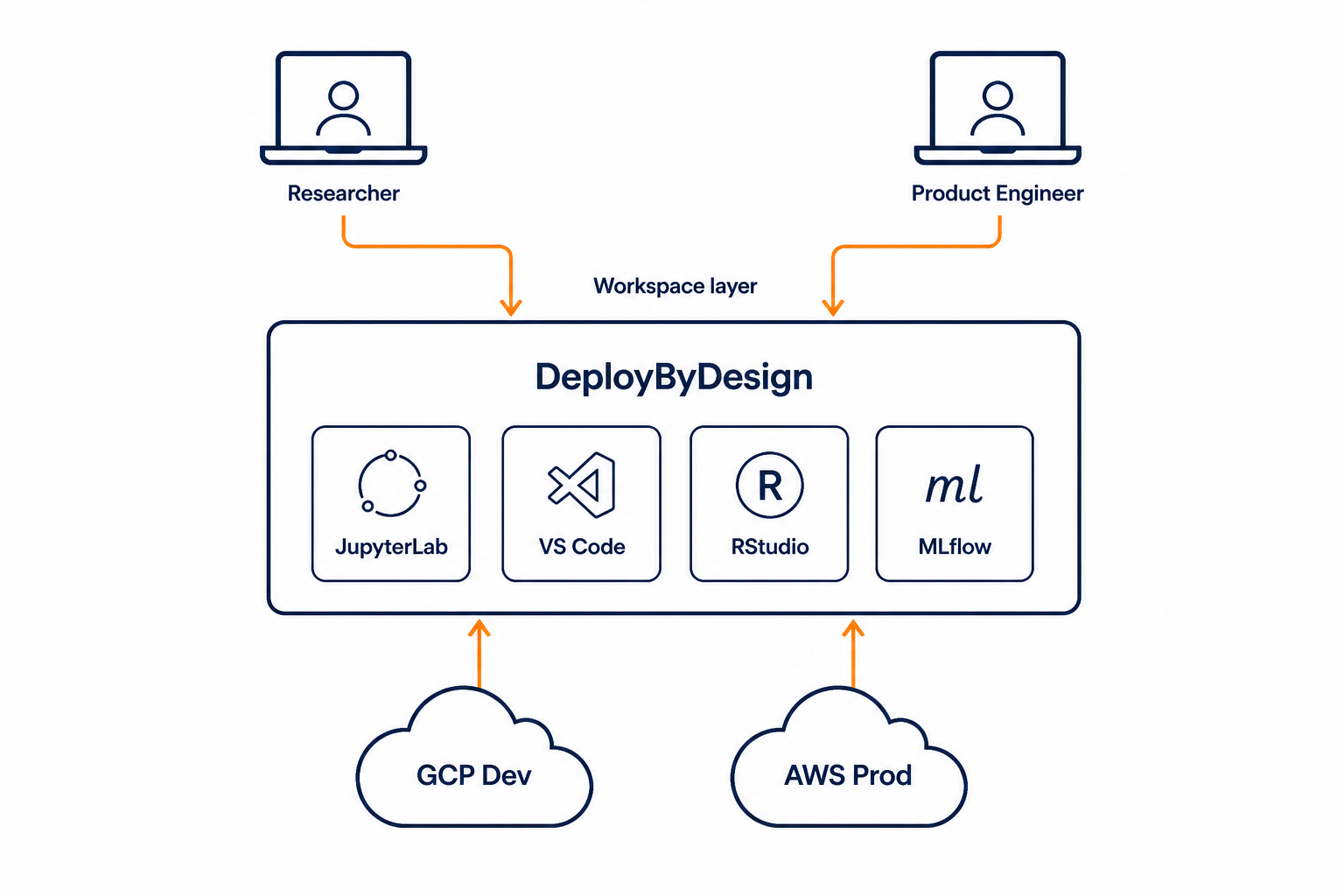
CattleSense wasn't built by one team working in isolation — it came together through close collaboration between Astradigit's AI research and AI Thinking Labs' product engineering. DeployByDesign's shared workspaces let both sides work inside the same environment in real time, instead of everyone maintaining separate setups and reconciling results afterward. For a project moving constantly between muzzle-recognition research and insurer-facing product features, that shared context mattered.
The stack spanned Python-based backend services, a React frontend, and AI models that needed rapid notebook-based iteration. Having JupyterLab, RStudio, and VS Code available out of the box, provisioned in minutes rather than hours, meant new team members and collaborators from AI Thinking Labs could get productive almost immediately — critical when coordinating a cross-team build between research and product engineering.
CattleSense's architecture already leaned on ECS Fargate, S3, GCP Buckets, and Compute Engine instances for the heavy lifting of containerized services and CI/CD. What the team needed from the workspace layer wasn't more infrastructure to manage — it was a way to reduce the number of moving parts they had to think about day to day. DeployByDesign let compute be something they could spin up, use, and tear down without it becoming its own project.
A lot of the tooling in this space is built for one persona — either the researcher who wants a notebook, or the platform engineer who wants a hardened production pipeline. CattleSense needed both, often in the same week. Being able to prototype a health-scoring model in a notebook and move that logic toward the production AWS environment, without the workspace itself being the bottleneck, shortened the distance between "this looks promising" and "this is live."
None of this infrastructure work is the headline of CattleSense's story — the headline is 99% biometric identification accuracy, a 25% productivity gain in field verification, and a foundation that's now shaping how insurers think about fraud-resistant livestock coverage. But that headline was only possible because the layers underneath it — compute, environments, tooling, access — didn't get in the way.
That's really the best endorsement for a platform like DeployByDesign: not that it does something flashy, but that it disappears into the background and lets the actual research problem stay the hardest part of your day.
If your team is juggling multi-cloud environments, a research team that wants to move fast without waiting on DevOps tickets, and collaborators who need to work together rather than around each other, the value of a platform like DeployByDesign isn't abstract — it shows up in the small frictions that don't happen: the credentials you didn't have to duplicate, the environment mismatch you didn't hit, the day you didn't lose to configuration instead of experimentation.
For CattleSense, that meant more time spent solving an actual insurance problem — and less time spent fighting the infrastructure meant to support it.